The Quiet Farewell to Freedom: Why Baden-Württemberg's "Modernization" Is a Digital Disaster
From pioneer to loss of control: Why I no longer trust the state or Big Tech with my digital sovereignty.

The Quiet Farewell to Freedom: Why Baden-Württemberg's "Modernization" Is a Digital Disaster
The reason for this post is the developments of recent weeks and the article by Heise https://www.heise.de/news/Kahlschlag-beim-Datenschutz-Baden-Wuerttemberg-plant-massive-Stellenkuerzungen-11288492.html
From pioneer to loss of control: While Stuttgart is cutting data protection by 40 percent, the police is upgrading with Palantir and facial recognition. For me as an IT person, a football fan who likes going to the stadium and sometimes gets flashed for driving too fast, this means concretely: The time for excuses is over. Whoever does not protect themselves becomes a transparent subject.
Baden-Württemberg was long, for me, the land of tinkerers, but also a place where data protection was taken seriously. The current course of the coalition of Greens and CDU under Cem Özdemir and the future interior minister Manuel Hagel feels to me like a turning point that I can only describe as fatal. Under the guise of a "modernization agenda," a restructuring of the state is taking place that seriously disturbs the balance between security and freedom.
The "Clear-Cut" as Strategy
I see a clever but transparent chess move: Positions at the state data protection commissioner (LfDI) are being cut massively, according to reports by almost half. The justification? Efficiency and the shifting of competencies to the federal level.
Reality looks different to me. Whoever weakens the controllers creates room for experiments that would never hold up under supervision. When almost 40 percent of the experts who watch the government's fingers on major IT projects are missing, data protection quickly becomes a paper tiger.

Palantir and Hagel: The New Architecture of Surveillance
With Manuel Hagel (CDU), an interior minister is moving in who makes no secret of wanting to increase the police's striking power through big data. At the center, for me, is the software from Palantir, a company that stands like few others for the merging of intelligence services and police work.
The problem, for me, is not the technology itself, but the lack of transparency. When algorithms decide who is "suspicious," and when facial recognition in public spaces becomes the norm, that fundamentally changes our society. In my opinion, we are moving away from the principle of presumption of innocence toward preventive dragnet investigation that puts every citizen under general suspicion.
That the Greens are going along with this course to hold onto the office of minister-president is, for me, a high price, paid with the digital self-determination of citizens.
The Fatal Signal: State "Black Boxes"
When the state purchases software whose source code it does not know (proprietary software), it makes itself dependent. When it simultaneously disempowers the supervisory authorities, "black boxes" emerge. Nobody can then independently verify whether data is being misused or whether the AI reproduces racist or social biases. For a federal state that lives on innovation, this departure from transparency and the rule of law in the digital space is, in my view, a certificate of poverty.

The Plea: Why We Must Leave "Big Tech" Now
This political development painfully shows me one thing: We cannot rely on the state to protect our privacy. On the contrary, the hunger for data does not stop at democratic governments either.
Whoever still entrusts their entire digital identity to the "Big Three" – Google, Apple, and Microsoft – makes it too easy for the architects of surveillance. These corporations work with interfaces that, in an emergency or by law, stand wide open for authorities.
The Path to Digital Sovereignty: Open Source
For me, it is time for digital self-defense. Switching to open source is no longer a hobby for nerds, but a necessity for everyone to whom freedom means something.
Away from Windows and macOS: Operating systems like Linux, for example Pop!_OS or Lubuntu for older hardware, do not send telemetry data to Redmond or Cupertino. You have full control over your kernel.
Your own cloud infrastructure: Instead of Google Drive or iCloud, Nextcloud is, for me, the measure of all things. Whoever hosts their documents and PDFs on their own instance, secured by 2FA, removes them from the reach of automated scanning algorithms.
Sovereignty over your own code: For developers and tech enthusiasts, migrating from platforms like GitHub to self-hosted solutions like Forgejo or GitLab is an important step. Your code, your rules.
Conscious use of hardware: We must start questioning which sensors we bring into our homes. Every smart camera that feeds into a proprietary cloud is, for me, a potential outpost of surveillance.
Conclusion: Act Instead of Hope
The clear-cut in data protection in Baden-Württemberg is, for me, a warning shot. When the control institutions fall, only personal responsibility remains. We must decentralize our data holdings and rely on tools that guarantee transparency through open source.
Freedom in the digital age is not given – you have to reclaim it through technical sovereignty. Become active before "modernization" has made you completely transparent.
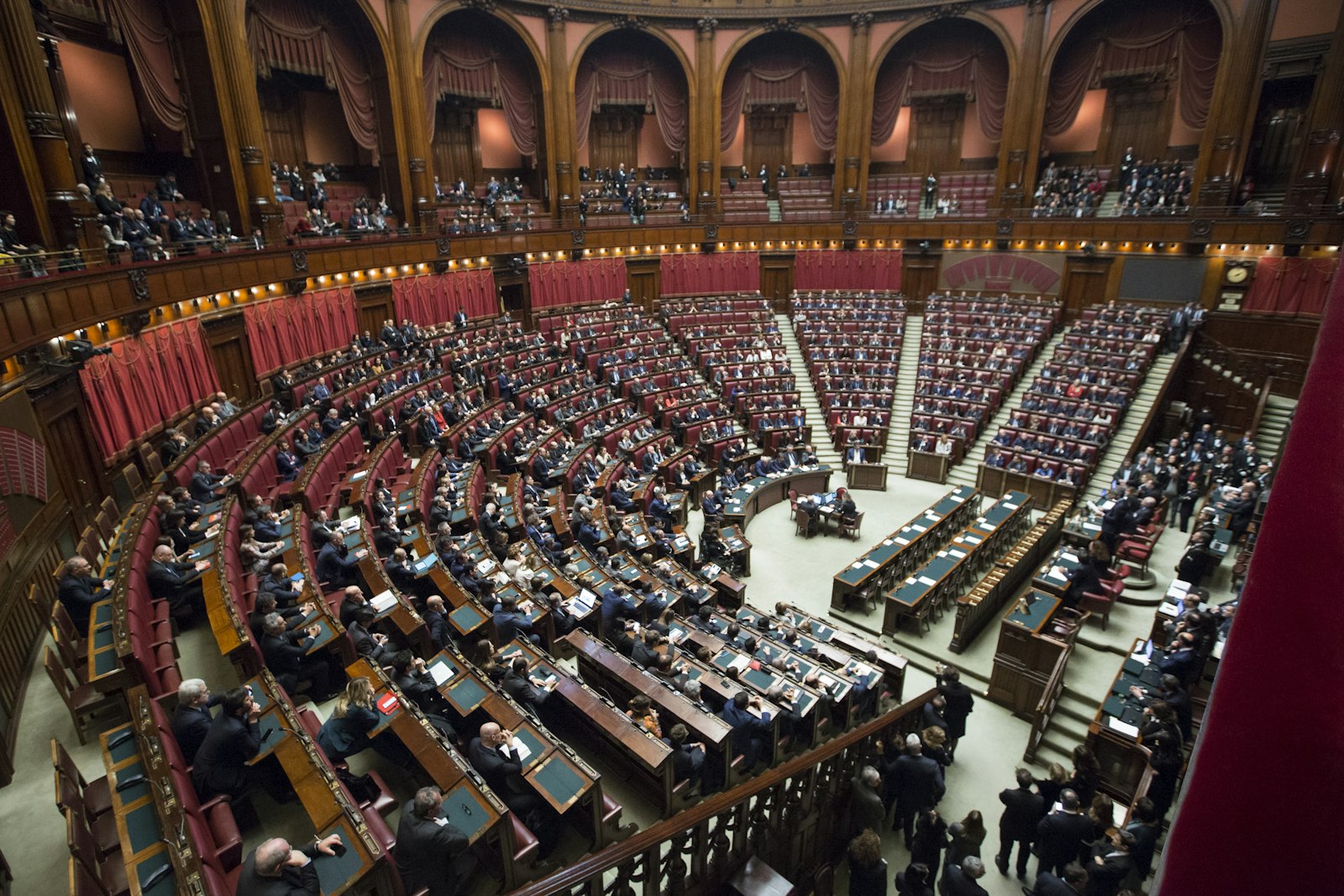
The Price of the Ballot Box: The Surrender of Sovereignty
I say it deliberately harshly: Whoever checked the box for the Greens, the CDU, or the AfD in the last election has chosen, consciously or unconsciously, to surrender liberal, free sovereignty.
The motives may differ, but the result is, for me, identical: Those who voted for the Greens acted from a noble intention – they wanted to prevent the AfD. But in this strategic fight, they sacrificed their own principles and now cling to their coalition partner CDU, no matter what it costs data protection.
Voters of the CDU and AfD, on the other hand, often believe the narrative of "security." They think software like Palantir is great because it "surveils the others." What they overlook: The surveillance infrastructure makes no distinctions. Whoever applauds Palantir for counter-terrorism today will be captured tomorrow because they were flashed for speeding. The data streams flow together. Once the system is in place, there is no more "I have nothing to hide" – then there is only complete recording. We sold freedom for an illusion.
Note: all images were generated with AI.